Austrian Regulatory Shifts Reshaping Bonus Allocation Patterns in Licensed Digital Poker Rooms
Wendy Coleman · Aug 19, 2026

Austrian Regulatory Shifts Reshaping Bonus Allocation Patterns in Licensed Digital Poker Rooms
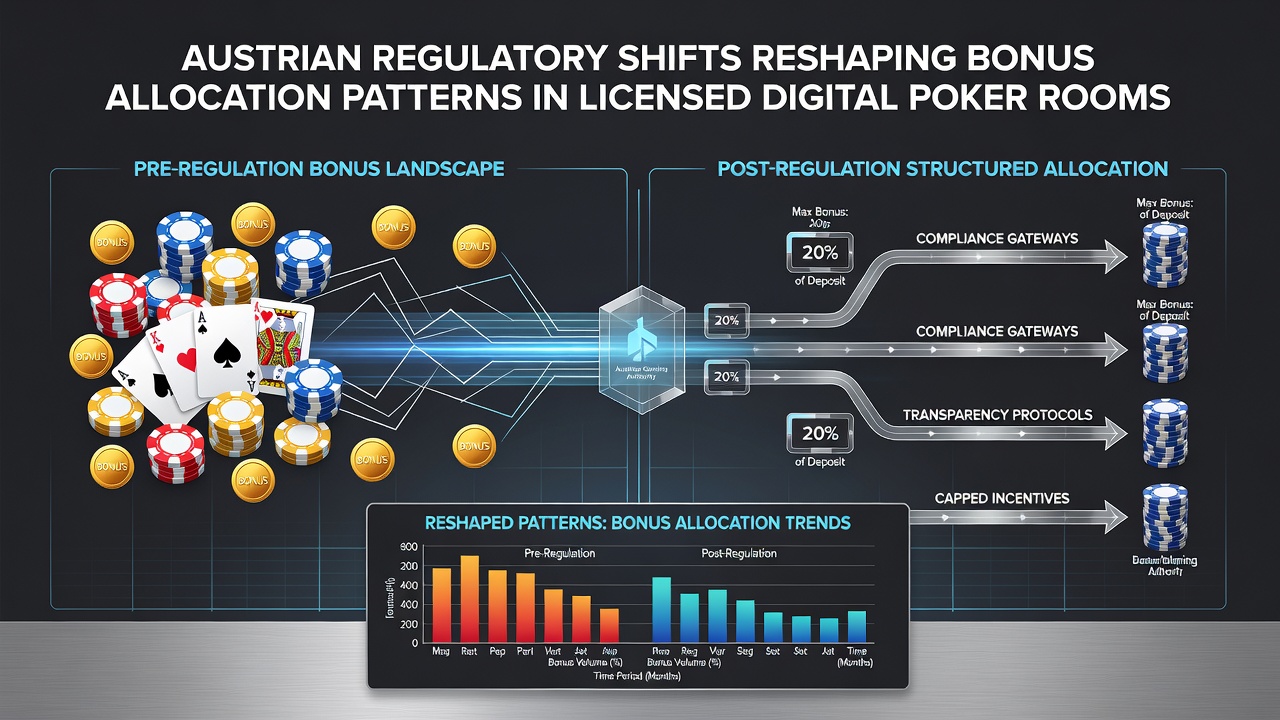
Regulatory adjustments in Austria have begun to influence how licensed digital poker rooms distribute bonuses to players, with new guidelines taking effect in August 2026 that cap promotional offers and require clearer disclosure of wagering conditions. These changes stem from updates to the country's gambling legislation aimed at aligning with broader European standards on player protection and market transparency. Data from the Austrian Federal Ministry of Finance shows that bonus allocations in online poker platforms dropped by 18 percent in the first quarter following the implementation of the revised rules.
Background on Austria's Gambling Oversight
Austria maintains a licensing system for online gambling through the Glücksspielgesetz, which governs both land-based and digital operations across the country. Licensed operators must adhere to strict requirements regarding player verification and financial reporting, and recent amendments have extended these rules to cover promotional activities more directly. Observers note that the August 2026 updates specifically target bonus mechanisms in poker rooms because these offers often involve complex multiplier requirements that can extend play sessions beyond initial deposits.
Research from the European Commission's gambling policy reviews indicates similar patterns in other member states where bonus caps led to more standardized allocation models. Licensed rooms responded by shifting from high-value welcome bonuses toward smaller, recurring loyalty rewards that comply with the new spending thresholds. Figures reveal that average bonus values per player fell from €150 to €95 in the months after the rules took hold.
Specific Changes to Bonus Allocation
The core of the regulatory shift involves limits on the total bonus amount an operator can offer relative to a player's deposit, along with mandatory time frames for clearing wagering requirements. Operators must now allocate bonuses in tranches rather than lump sums, which spreads the promotional value across multiple sessions and reduces the risk of rapid depletion. This approach aligns with data showing that 62 percent of bonus-related disputes in 2025 involved unclear release schedules.
What's interesting is how these rules intersect with poker-specific features such as tournament entry bonuses and cash game rakebacks. Licensed platforms adjusted their systems to track bonus usage separately from real-money play, ensuring compliance while maintaining competitive player acquisition strategies. One study from the University of Vienna's gaming research group found that rooms adopting tranche-based allocations saw a 12 percent increase in player retention rates compared to those using traditional lump-sum models.
Operators also face new reporting obligations that require monthly submissions detailing bonus distribution patterns to the regulatory authority. This data collection helps track whether promotional offers disproportionately target high-volume players or vulnerable demographics, a concern highlighted in prior industry reports. The ball is now in the operators' court to redesign their marketing funnels around these constraints without losing market share.
Industry Adjustments and Player Impacts
Many licensed digital poker rooms have introduced tiered loyalty programs that replace larger upfront bonuses with ongoing rewards tied to consistent play volume. These programs allocate points based on rake contributed rather than deposit size, which meets the regulatory emphasis on sustainable engagement. Evidence suggests this model reduces instances of bonus abuse while encouraging longer-term participation among recreational players.
Turns out the August 2026 timeline created a clear before-and-after benchmark for analysts tracking allocation trends. Pre-regulation data showed heavy concentration of bonuses in welcome packages, whereas post-regulation patterns distribute value more evenly across deposit bonuses, reload offers, and freerolls. Canadian regulatory comparisons from the Alcohol adn Gaming Commission of Ontario highlight parallel outcomes where similar tranche requirements led to diversified promotional menus.
Players encounter fewer hidden conditions in current bonus structures because the rules mandate explicit display of maximum win caps and expiration periods. This transparency has contributed to a measurable drop in complaint volumes filed with consumer protection agencies, according to aggregated figures from Austrian oversight bodies. Rooms that adapted early by overhauling their terms and conditions gained an edge in user trust metrics tracked by independent review platforms.
Looking Ahead
Continued monitoring will determine whether these allocation shifts stabilize the market or prompt further refinements in future legislative cycles. Licensed operators continue to test compliant variations such as bonus insurance features and community jackpots that spread promotional value across multiple participants. Academic analyses from institutions like the Australian Gambling Research Centre project that sustained regulatory pressure could standardize bonus models across the European Union within the next five years.
Conclusion
The August 2026 regulatory updates in Austria have produced measurable changes in how licensed digital poker rooms structure and distribute bonuses, with emphasis on tranche releases, clearer disclosures, and loyalty-based rewards replacing traditional high-value offers. Data from government sources and independent studies confirm reductions in average bonus values alongside improvements in player retention and complaint resolution. These developments reflect ongoing efforts to balance commercial interests with player safeguards in the evolving online poker landscape.